A Future Postcard for an Ordinary Tuesday
A future postcard for an ordinary Tuesday turns local hopes into a vivid scene residents can question, compare and use to identify shared priorities.
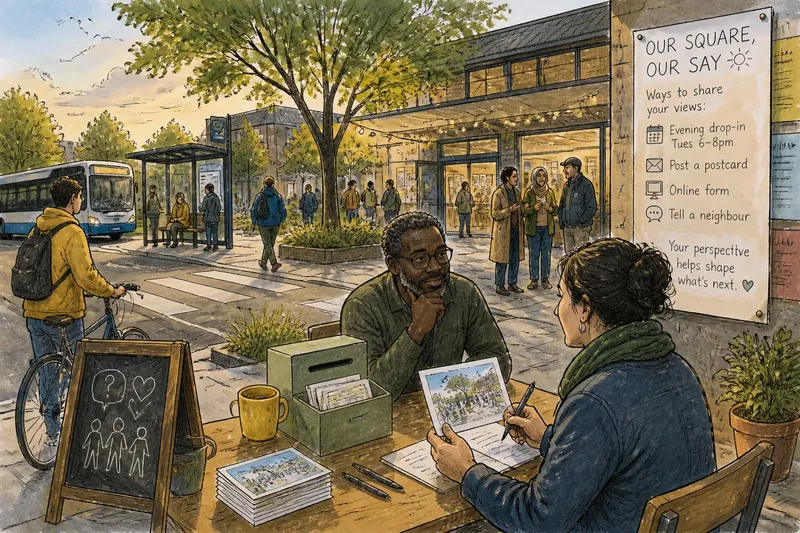
What could a future postcard for an ordinary Tuesday help your neighbours decide is worth discussing? Choose one familiar local moment, then write a short message from a possible future that makes a civic priority visible without presenting it as a prediction or settled plan.
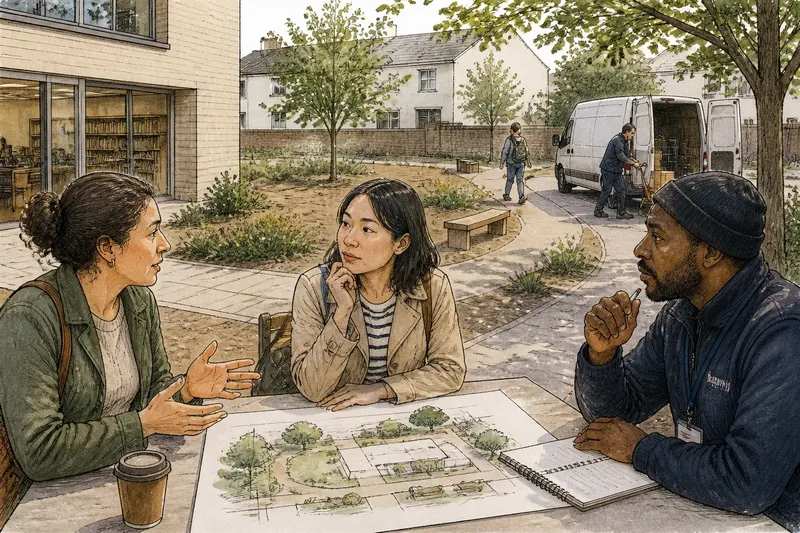
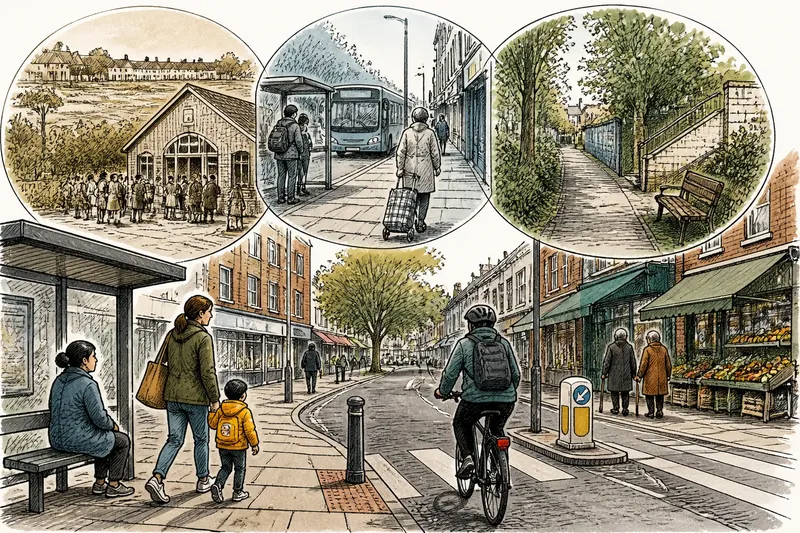
The postcard is useful because it gives people something specific to respond to: a crossing, a library entrance, a bus stop or a shared space. Treat it as an invitation to examine what matters, what is missing and which questions belong in a wider civic conversation.
Choose a civic question
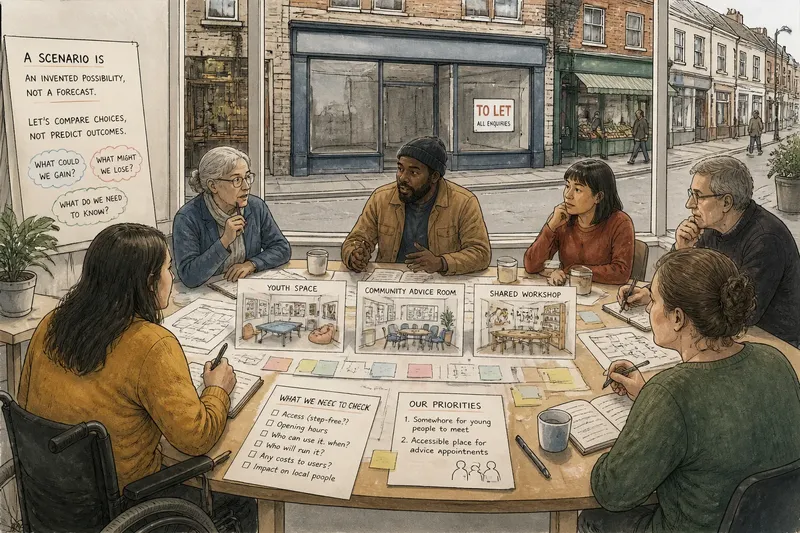
Begin with an issue residents can discuss together, rather than trying to describe an entire future neighbourhood. You might focus on how people reach a community centre, whether local information is easy to find, or how residents can make their views heard about a public space.
Pick a place that gives the question context: a library noticeboard, a residents’ meeting room, a high-street junction or a route to a bus stop. Name whose perspective the postcard follows, while making clear that one person’s account cannot speak for everyone.
A useful prompt might be: “On an ordinary Tuesday, what would make it easier for residents to hear about changes to the square and respond?” That question leaves room for different answers instead of assuming a preferred solution.
Build a small scene
Write a few sentences in the voice of someone living through the imagined day. Include what they are trying to do, what they encounter and what has changed in the way a civic issue is handled. Use a concrete detail, such as a notice in plain language or a meeting time that a shift worker can consider, rather than relying on broad claims about a better community.
Keep the difference between hope and fact visible. A postcard can say that a resident understands how to comment on a proposal; it should not imply that a council has adopted a policy unless that is already confirmed. The scene is a prompt for questions, not evidence that an idea is feasible or agreed.
Say you are writing about a community centre’s opening hours. Your starting point is an imagined resident who works evenings and cannot attend the usual daytime drop-in. You write a postcard from a possible Tuesday in which the centre shares an evening consultation option and explains how to send a view another way. The resulting scene makes an access question clear; it does not decide whether the centre has staff or resources to provide that option.
Check the civic detail
Before sharing the postcard, look for claims that need clarification. Use this list to decide whether to keep a detail, revise it or ask a responsible organisation for more information:
- Observation: The postcard names a public body as responsible for a change. If that responsibility is confirmed, keep the name; if not, describe the issue without assigning responsibility and ask the relevant organisation.
- Observation: The scene says residents can influence a decision. If the available consultation or decision process is known, describe it accurately; if not, change the claim to a question about how residents can contribute.
- Observation: The postcard gives a meeting time or venue. If those details are confirmed, retain them; if not, remove them and ask the organiser before circulation.
- Observation: A person’s experience is presented as typical. If other perspectives are represented, explain that the scene is one account; if not, label it clearly as an individual imagined perspective and invite additional accounts.
- Observation: The proposed change depends on access, staffing or local rules. If those conditions are confirmed, mention them plainly; if not, frame them as questions and avoid presenting the change as ready to implement.
- Observation: The wording assumes a single shared priority. If residents have expressed different views, show that difference; if not, ask what other priorities should be included before calling the issue shared.
This is a little like placing a note beside a map: the note can point out a question, but it cannot settle who owns the route or what happens next.
Invite useful responses
When you share the postcard, explain who wrote it and what it is for. Ask readers to respond to the civic question, not merely to approve or reject the imagined scene. Useful prompts include:
- Which part of this scene reflects an issue you recognise?
- Whose experience or concern is missing?
- What would need checking before anyone could act on this idea?
Collect responses in a way that does not privilege only those able to attend a meeting. A library comment card, a paper copy at a community centre or a response through an established residents’ group may suit different people. Offer a way to correct or withdraw contributions if you plan to share them beyond the conversation.
Keep disagreement visible. If one resident wants a meeting and another prefers a written route to contribute, preserve both priorities rather than smoothing them into a false consensus. A clear record can show which questions remain open and who needs to be consulted further.
Questions residents ask?
Should the postcard name a real proposal?
It can refer to a proposal if you distinguish confirmed details from imagined ones. If the proposal is still uncertain, phrase the postcard as a question about what residents need to know or discuss.
Can one postcard represent the neighbourhood?
No single postcard should be presented as the voice of a whole area. Describe it as one perspective, then invite other residents to add accounts that may differ.
What if people disagree about the priority?
Keep the competing priorities side by side and record what each person is concerned about. The disagreement can help identify which groups, facts or decision processes need further attention.
How can someone contribute without attending?
Offer a written prompt through a local group, library or community venue, with a clear route for returning a response. Share back what was received in an accessible format and invite corrections.
Keep the next question open
Before using the postcard in a residents’ meeting or public display, check that it does not imply endorsement, promise a decision or reveal someone’s personal information without permission. Where local procedures or responsibilities matter, seek confirmation from the relevant council, organisation or qualified adviser.
Keep the final postcard beside the question it raises, not in place of the civic process that must address it. A future postcard for an ordinary Tuesday earns its place when residents can identify a concrete issue, add a perspective and name what needs checking next.