One Local Question, Three Different Viewpoints
One local question can mean different things to residents, visitors and service providers. Learn to name each viewpoint and make civic discussion clearer.

What should happen to the empty ground beside the library? That local question sounds straightforward until a resident, a visitor and the people who maintain nearby services begin answering it. A resident may be thinking about a quiet place to sit; a visitor may need a clear route through the area; a library worker may be concerned with deliveries, access and the demands on staff. Naming the viewpoint does not settle the question, but it helps everyone see what they are actually discussing.
When a neighbourhood considers possible change, a shared question can conceal different expectations. The useful task is not to decide which group owns the right answer. It is to distinguish what each group notices, what they need to know and what kind of decision their viewpoint can inform. This is especially helpful in early civic conversations, before a proposal has hardened into a choice between competing designs.
Start with the speaker
Before comparing ideas, state who is speaking and what connection they have to the place. “Residents want more seating” sounds like a single public position. “Some residents who live near the library want somewhere to sit during the day” is more precise: it identifies a perspective without pretending to represent everyone.
This small change makes discussion more honest. A person can speak from personal experience, professional responsibility or an occasional visit. Those positions can overlap, but they are not interchangeable. Someone who lives beside a site may know when it is noisy. A visitor may notice that directions are unclear. A service worker may understand which routes must remain open for routine operations.
Use this distinction to sort a conversation by situation:
- Choose the resident viewpoint when the question concerns regular use, daily routines, nearby effects or a sense of belonging. Ask which residents are being heard, since neighbours on different streets may experience the same change differently.
- Choose the visitor viewpoint when the question concerns arrival, orientation, welcome or access for someone unfamiliar with the area. This may include people visiting for an appointment, shopping or an event, rather than tourists alone.
- Choose the service-provider viewpoint when the question concerns how a place is maintained or connected to a service. Include the people who deliver, operate, clean or support that service, not only those who make formal decisions about it.
These are starting positions, not fixed identities. A shopkeeper can live locally, a visitor can have a disability that shapes how they use a route, and a council employee can also be a resident. The point is to make the relevant experience visible for the question at hand.
Read each viewpoint
For residents, the central concern is often continuity: how a change might affect ordinary routines and relationships with nearby places. That does not mean residents always favour keeping things as they are. Someone may want a safer crossing, a livelier square or a different use for a vacant building. The useful prompt is: “What part of daily life would this change touch, and for whom?”
For visitors, the place is encountered through a shorter sequence: finding it, entering, understanding what is available and leaving. They may spot barriers that familiar users have learned to work around, such as an unclear entrance or a route that is difficult to follow. Their viewpoint can reveal how legible and welcoming a place feels, but it cannot by itself describe the long-term effects on people who use the area every day.
For service providers, the question tends to include conditions that are less visible to the public: access for a collection vehicle, room for maintenance, staff responsibilities or a connection to another facility. Their practical knowledge can prevent a conversation from overlooking how a place functions. At the same time, operational convenience is one consideration, not a substitute for public priorities.
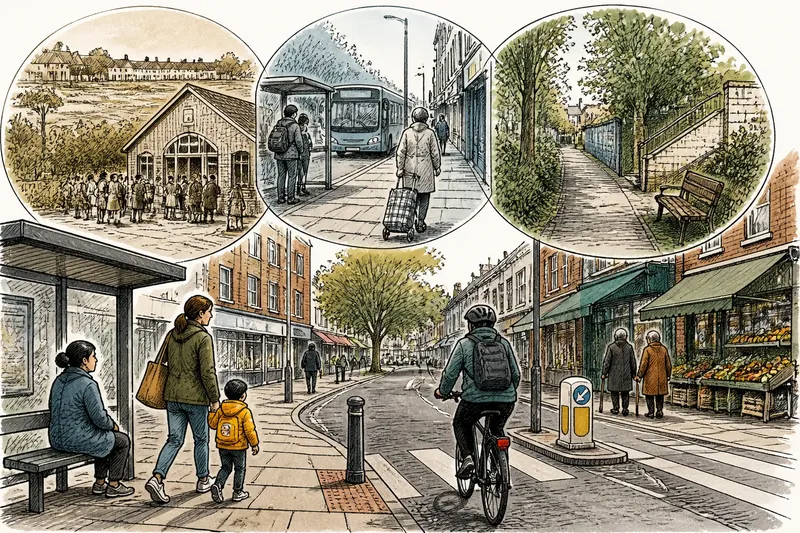
Think of these viewpoints as three windows facing the same street. Each shows real details, while none gives the whole view. The task is to notice what each window makes clear and what remains outside its frame.
Match the question to the need
A decision guide should help a group choose the right viewpoint for the immediate discussion, rather than flattening every concern into one broad consultation. If the issue is whether a local space feels useful across an ordinary week, begin with residents and ask about different routines. If the issue is whether a newcomer can find the entrance, invite people who do not already know the site. If the issue is whether a proposed use can operate alongside existing services, speak with the relevant workers and clarify what they are responsible for.
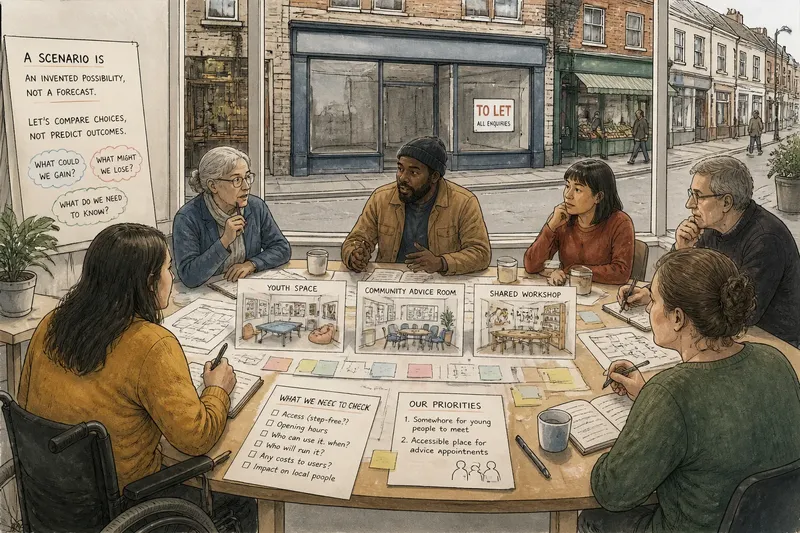
Say a neighbourhood group is discussing whether the empty ground beside the library could host a small sheltered seating area. A resident who walks there after collecting a child may ask whether the space feels comfortable to use while waiting. A visitor may ask whether the seating is easy to find from the main entrance. A library worker may ask whether it would obstruct deliveries or make the entrance harder to supervise. The group could record these as separate questions, then compare ideas against all three instead of treating one person’s concern as the whole brief.
This approach also helps when views appear to conflict. A preference for a sheltered seat and a need to keep a delivery route clear are not necessarily opposing visions of the area. They may point to a design question about location, timing or access. But where a genuine trade-off remains, naming the viewpoints makes it possible to ask who bears the inconvenience and who benefits.
Make the frame visible
In a meeting, workshop or written invitation, state the viewpoint in the prompt. Instead of asking, “What should happen here?”, try “What would make this place work better for people who live nearby?” Then pose a separate prompt for visitors and another for those who provide services. Keep the prompts close enough that people can compare answers, but do not imply that one group is speaking for another.
When collecting responses, note the connection to the place in plain language. Avoid demanding personal details that are not needed. A person might write “I use the library every week” or “I deliver to the site”, which gives context without turning a conversation into a census. Make room for people whose relationship to a place is occasional, changing or difficult to summarise.
When a proposal depends on a particular service, responsibility or access condition, check the relevant local rules and the organisation’s instructions before treating an idea as feasible. Keep that check distinct from the question of whether the idea reflects what people value. A proposal can be workable and still be unwanted; a popular idea may also need revision to fit practical conditions.
Questions worth separating?
Should residents decide for visitors?
No single viewpoint should stand in for all the others. Residents can describe regular local effects, while visitors can identify how the place works for someone unfamiliar with it; each account informs a different part of the discussion.
Who counts as a service provider?
Include people whose work keeps the place or a related service operating, such as maintenance staff, library workers or delivery teams. Ask what they know from that role, rather than assuming their job title gives them authority over every public preference.
What if one person fits all three roles?
Let them state which experience they are drawing on in each comment. Their overlapping connection may be useful, but it does not make their account representative of everyone who shares any of those roles.
What if the viewpoints disagree?
Write down the underlying needs before debating solutions. A disagreement may expose a real trade-off, or it may reveal that people are answering different versions of the original question.
Keep the voices distinct
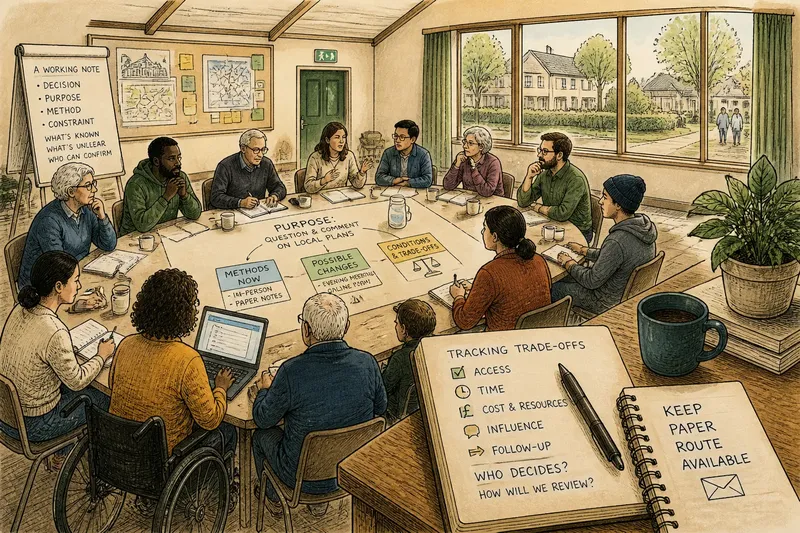
A useful record preserves differences rather than smoothing them into a vague statement of consensus. Note what residents want to protect or change, what visitors need to understand or access, and what service providers say must continue to function. Then identify where these concerns support the same direction and where they place competing demands on a site.
That record gives the next conversation something solid to work with. It can help a group revise its question, invite a missing viewpoint or compare possible uses against clearly stated needs. A local question becomes more answerable when the people discussing it can see whose experience is shaping each part of the answer—and what that experience cannot settle alone.
For the empty ground beside the library, “What should happen here?” may be too broad to guide a useful exchange. One local question, asked from three viewpoints, can instead reveal what residents value, what visitors encounter and what services need. The next useful move is to keep those findings visible when the group turns from listening to considering choices.